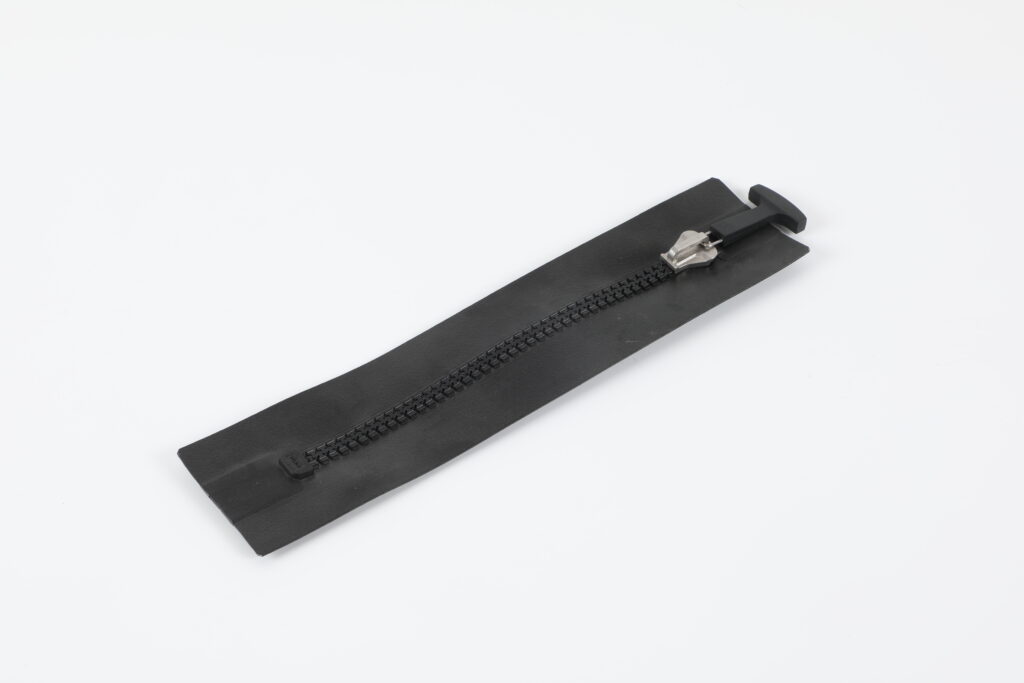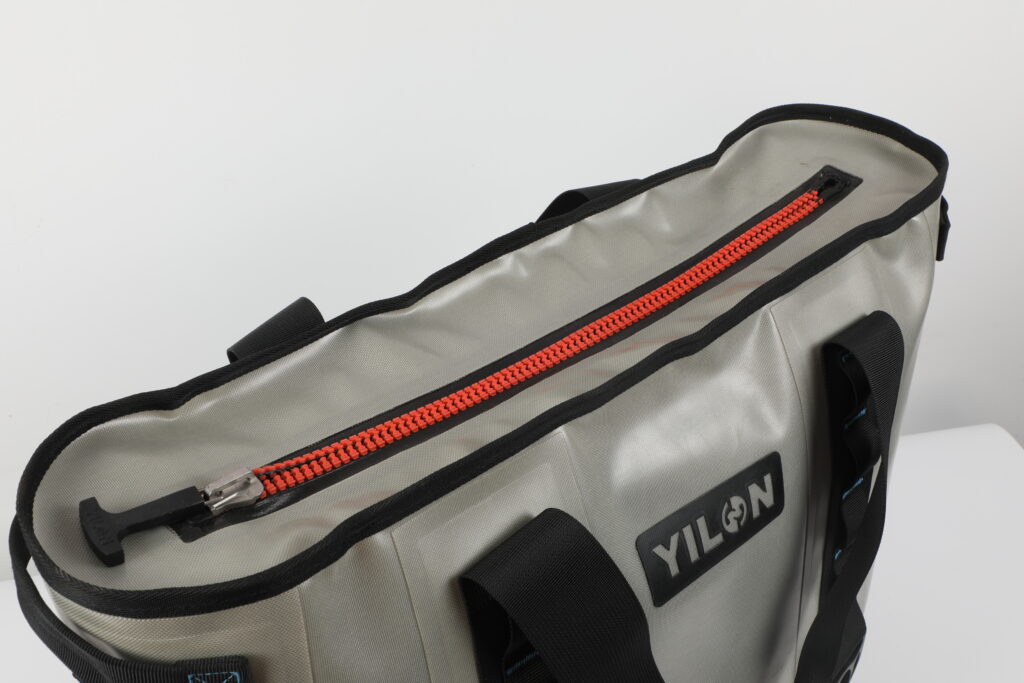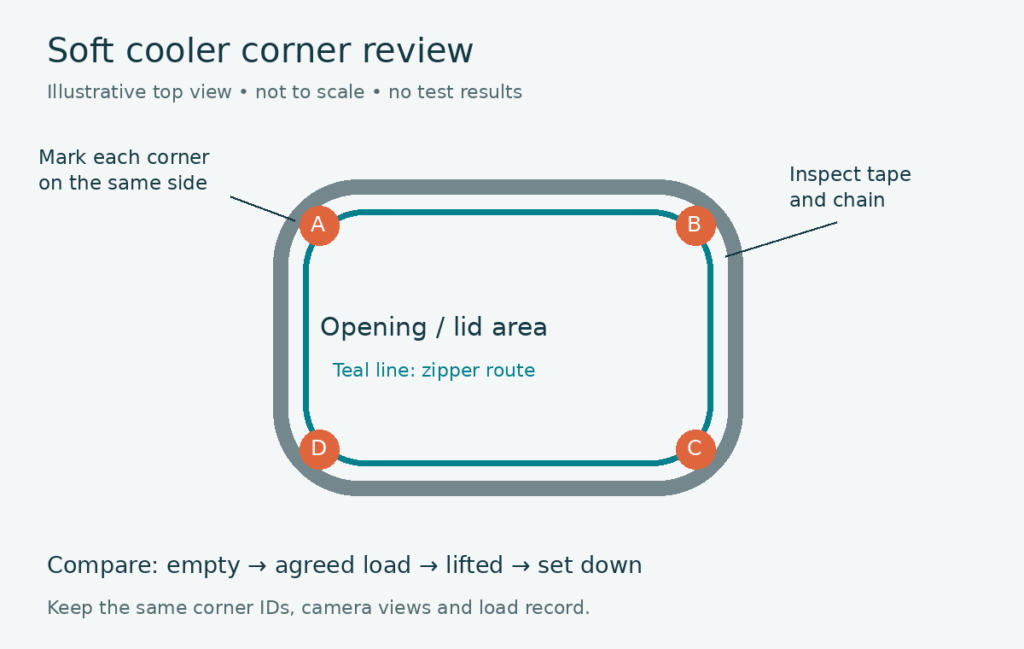
A soft cooler can close smoothly while empty and become awkward to zip after packing. Its walls may bow outward, the lid may sit differently, and the zipper route can twist near a corner. Reviewing only the straight section leaves those changes unexamined.
Give soft cooler zipper corners their own inspection points during sampling. Follow each corner from the flat pattern to the assembled bag, then compare the same points under the intended load. The aim is to locate the source of a handling or sealing problem before changing the zipper specification.
Locate corner loads
Mark the zipper path on the opening drawing, including its centerline, attachment area and both ends. Identify the corners consistently, such as A through D in the illustrative cover diagram. Include nearby seams, lid reinforcement and handle attachments: they help explain how the surrounding panels move.
A corner asks the chain and tape to change direction. At the same location, the lid, lining and outer wall may have different shapes or stiffness. Check whether the assembled layers let the zipper follow its intended route without a sharp fold or twist. Ask for routing limits for the exact zipper configuration; there is no universal corner radius that can be assigned from a product photograph.
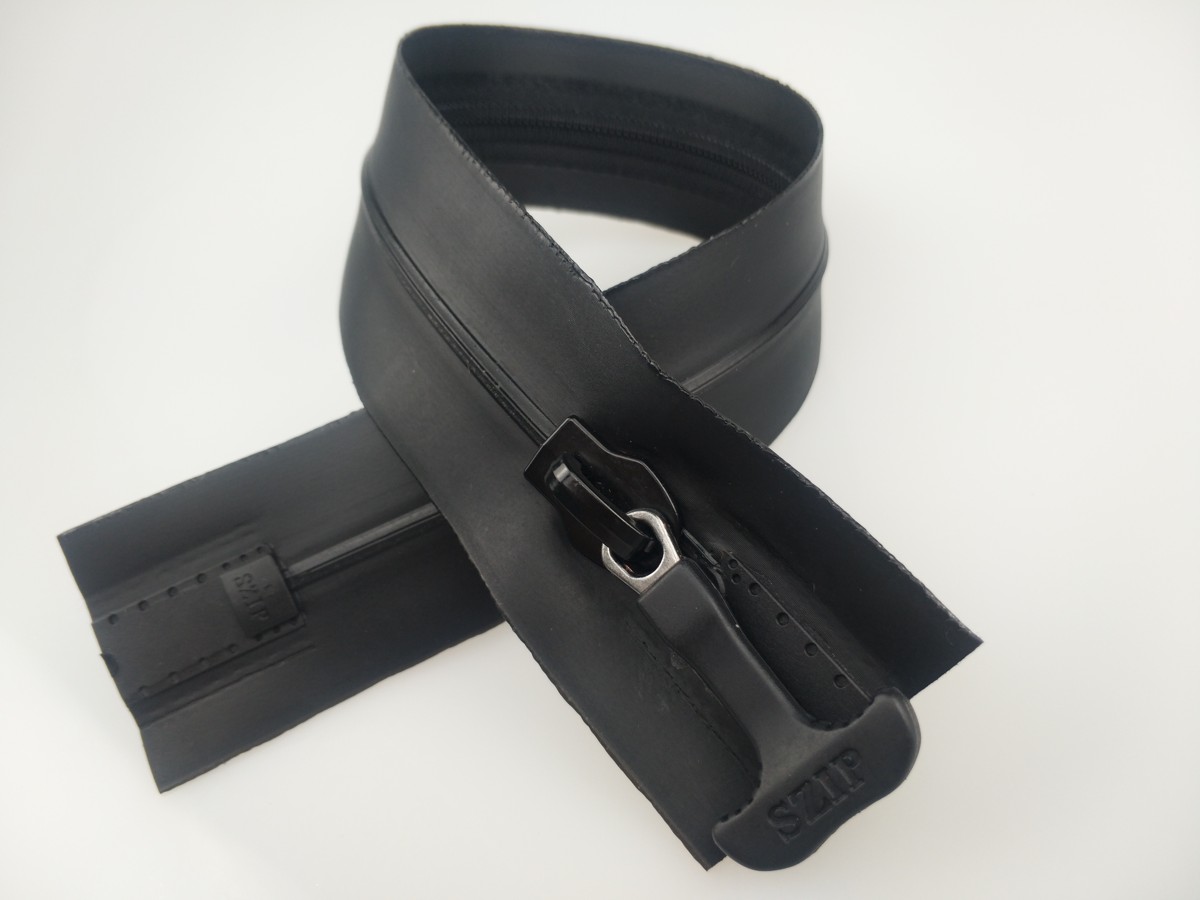
Look at where carrying forces enter the bag. A handle fixed below the opening can change the wall shape when the loaded bag is lifted. Check whether that movement reaches the zipper tape, pulls across the chain or changes the lid position. A neat empty-bag outline does not answer those questions.
Keep the slider’s approach to the corner visible during inspection. Note whether the operator follows its intended travel direction, supports the panel with the other hand, or pulls sideways to get past a bend. If it catches, stop and locate the obstruction before applying more force.
Compare full and empty cooler shape
Use the same prototype for the first comparison. Record its empty condition, then load it with the agreed contents and packing arrangement. Include any specified rigid containers or cooling packs, since their position determines where they press against the walls and lid.
Photograph the opening from above and each corner from the same oblique view. Compare the cooler resting on a surface, lifted by its intended handles, and set down again. Follow the product’s intended handling conditions; these observations are a development review, not a load-capacity certification.
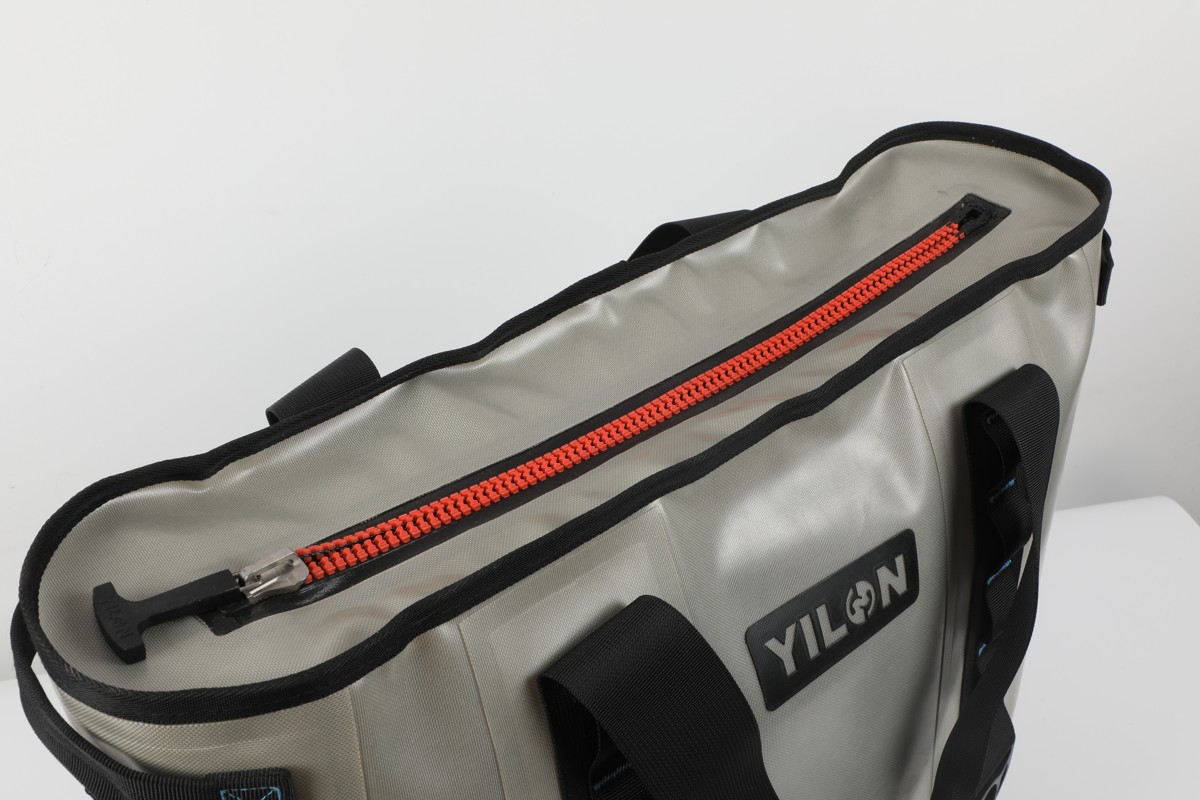
Watch for a lid that needs to be pushed into place, a wall that has to be squeezed inward, or a corner that changes shape as the slider passes. Record where the change occurs and whether unloading restores the original shape. These observations help separate a packing-space problem from a local attachment or routing problem.
Review usable capacity with the opening correctly closed. Extra contents should not occupy space reserved for the closure. Our comparison of zippered and roll-top bag construction explains how closure allowances affect the pattern and assembly.
| Observation | Possible contributor to investigate | Useful comparison |
|---|---|---|
| Tape wrinkles beside one corner | Layer alignment, attachment allowance or panel shape | Flat panel against the assembled opening |
| Chain twists when the cooler is lifted | Wall deformation and handle load path | Same load resting and lifted |
| Slider hesitates only when packed | Contents pressing against the lid or opening | Same prototype empty and with the recorded load |
| Closing end becomes hard to reach | Flap, trim or lid movement | End clearance before and after loading |
| Water appears near a corner | Chain, attachment joint or adjacent seam | Locate the entry path under the agreed test conditions |
Record corner distortion in prototypes
Give each sample a revision ID. For each corner, record the load arrangement, support condition and stage of operation. Use close photographs to show tape wrinkles and the joint, plus a wider view showing the lid and wall. Annotate copies with the corner ID and observation; keep the original photographs for comparison.
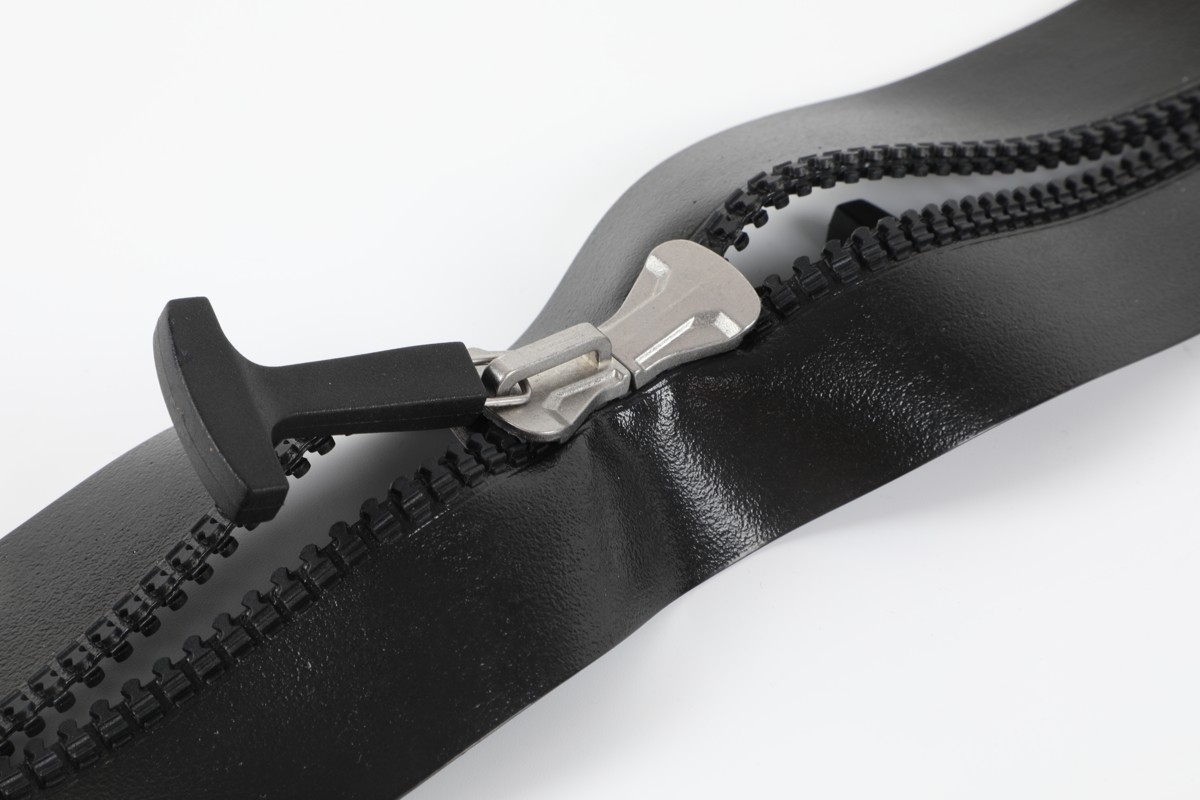
Describe what happened before proposing a cause. “Corner B twists while lifting the loaded sample” is a useful record. “Bad zipper” leaves the sample maker without a location or condition to reproduce. Where operating effort needs a numerical comparison, agree on a measurement method and fixture rather than assigning a force value from hand feel.
Change one relevant design variable at a time where practical, then repeat the same comparison. A revised corner path, panel allowance or reinforcement location should have its own revision record. Keep the zipper configuration and load consistent when evaluating the effect of a pattern change.
Evaluate water protection separately under a defined exposure, orientation and acceptance criterion. Locate any water-entry path before attributing it to the chain. The guide to waterproof zipper selection for bags covers the distinction between component evidence and complete-bag evaluation. Zipper performance alone also establishes neither food-contact suitability nor temperature retention.
Retain the approved corner drawing, material stack, attachment process and comparison photographs together. Production inspection can then check the same locations against a known sample, and later pattern changes can be reviewed under the same conditions.